Turning E-Waste into Art: Jelani Odhiambo's Radical Vision
From Dandora dumpsite to the national museum.
Dandora, on the eastern outskirts of Nairobi, is home to one of Africa's largest dumpsites. Every day, trucks deposit tonnes of waste — including mountains of discarded electronics from across East Africa. It's here, amid broken screens and tangled wires, that Jelani Odhiambo finds his raw materials.
Art as Alchemy
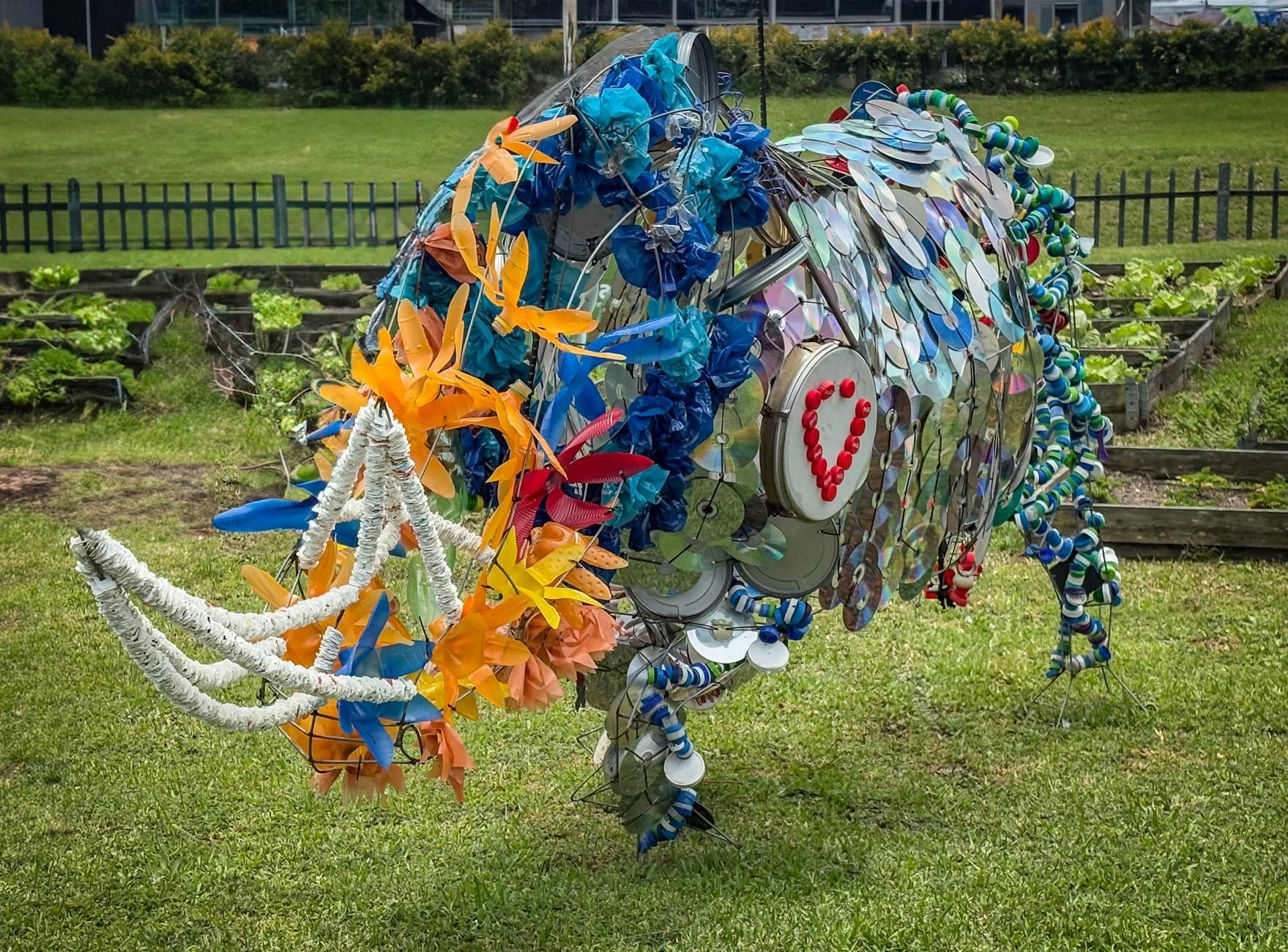
Odhiambo's process begins with scavenging. He walks through Dandora wearing heavy gloves and a respirator, selecting components for their shape, color, and texture. Circuit boards become mosaics. Copper wiring transforms into flowing organic forms. Old phone screens are arranged into luminous panels that glow when backlit.
"I'm not recycling," he insists. "I'm transforming. There's a difference. Recycling implies the material goes back to what it was. My work argues that it can become something entirely new."
Recycled Futures
His latest exhibition, "Recycled Futures," at the Nairobi National Museum, features a 3-meter tall figure assembled entirely from e-waste. The sculpture — titled "The Digital Ancestor" — depicts a human form emerging from a cocoon of circuit boards, symbolizing humanity's complicated relationship with technology.
The exhibition attracted over 15,000 visitors in its first month and sparked conversations about Kenya's growing e-waste crisis. According to the UN, East Africa generates approximately 2.9 million tonnes of e-waste annually, with less than 5% being formally recycled.
Impact Beyond Art
Odhiambo doesn't just create art — he mentors. His workshop in Kisumu trains young people from informal settlements in metalwork, electronics, and creative thinking. "Art is a gateway," he says. "Once someone learns to see beauty in discarded things, they start seeing possibility everywhere."
In a country drowning in electronic waste, art isn't just expression — it's an intervention.
— Jelani Odhiambo, Visual Artist